Transform Your Parquet: From Tired to Timeless
Parquet floors deserve better than a quick once-over with a mop and a hopeful sigh. They’re heritage underfoot: little geometric miracles that add rhythm, warmth and value to a home. Given the right care, they outlast fashions and furniture alike. Neglected, they look weary; cherished, they become the room’s quiet show-stopper.
This guide is your complete, plain-spoken roadmap to bringing tired parquet back to life—without drama, dust clouds or expensive missteps. You’ll learn what to look for, what to expect from a professional refurb, how long it takes, how much it tends to cost, and how to keep that newly revived sheen for years.
If your aim is beauty you can feel as well as see, the journey begins with Joyful Restoration—an approach that treats each block, border and motif with care, skill and a dash of design sense.
What makes parquet so special?
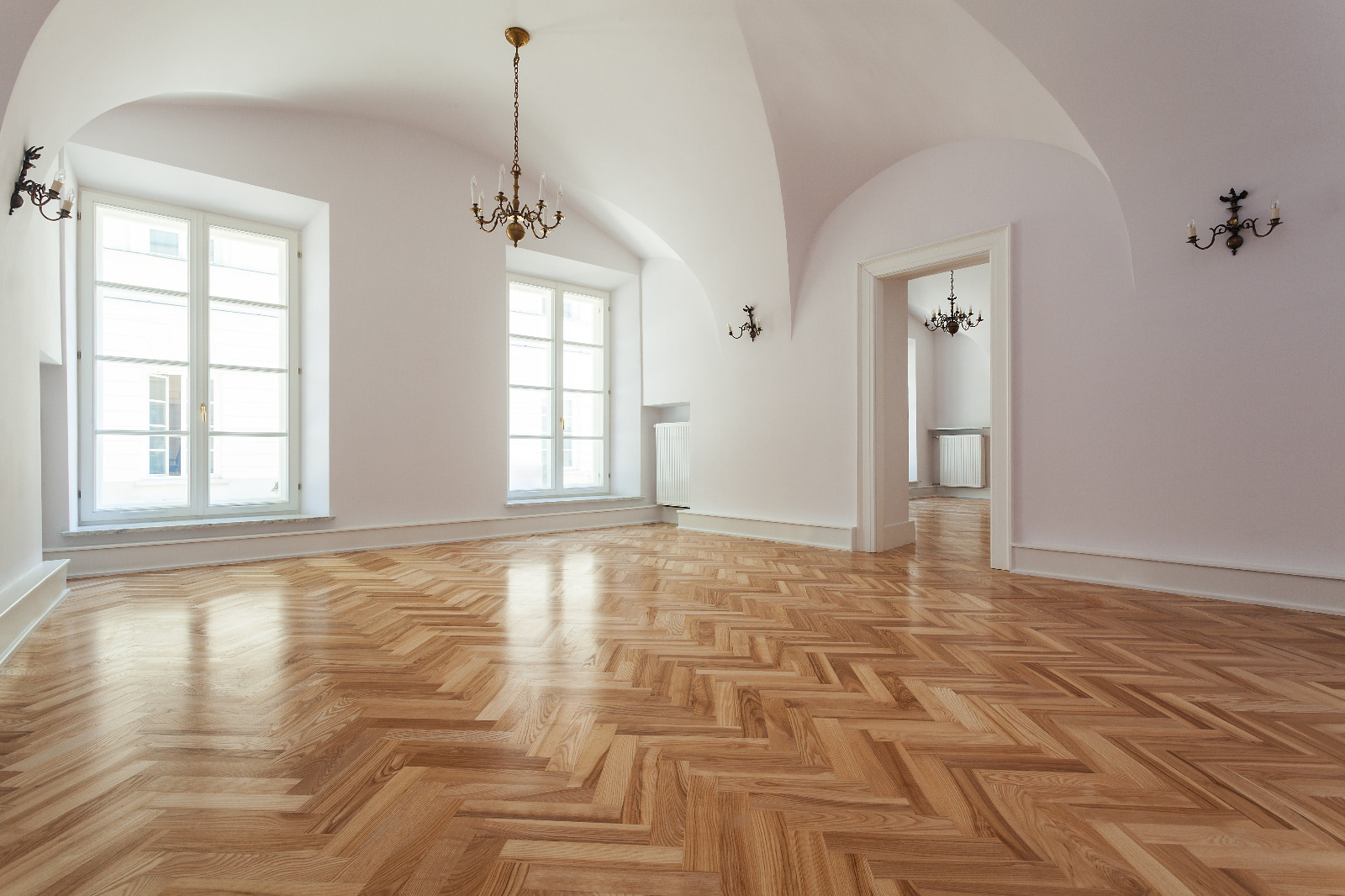
Parquet is not just “wooden flooring”. It’s a mosaic: small blocks (traditionally oak, but also walnut, maple, beech and more) laid into patterns—herringbone, chevron, basketweave, Versailles panels, ladder and brick. Each pattern changes how light moves across the room. Herringbone energises; chevron elongates; basketweave softens. Borders frame spaces like a picture mount.
Because the blocks are small and laid across grain directions, parquet handles seasonal movement better than wide boards. It also takes stain beautifully, which means you can tune the mood—Scandi-pale, honeyed mid-tones, rich smoked browns—without swapping the floor.
In short, parquet pays you back twice: once when you enter the room and again when you sell the house.
How to tell your parquet is due a refresh
Before booking anything, give the floor an honest look in daylight:
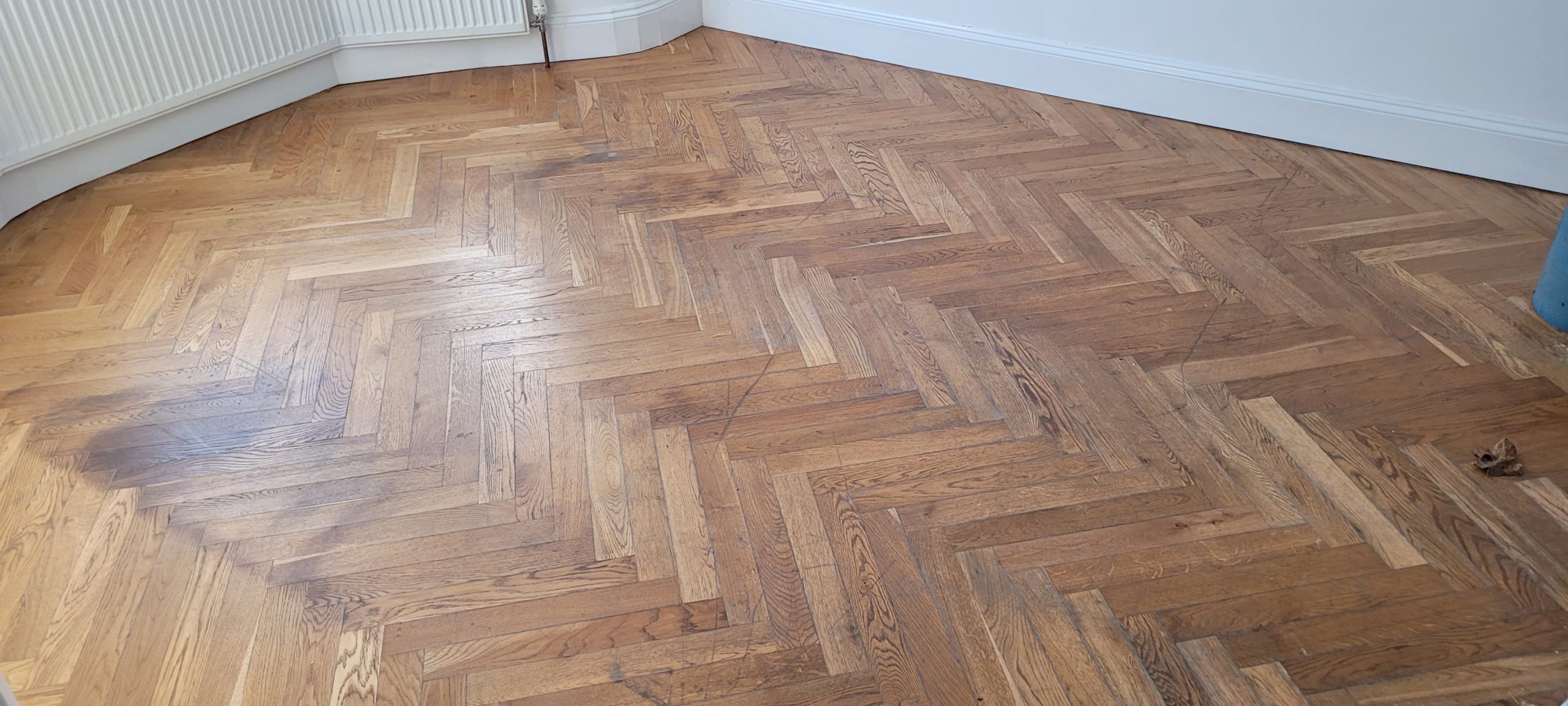
- Finish failure: white patches, peeling lacquer or dull grey traffic lanes.
- Splinters or raised edges: often in doorways and around rugs.
- Gaps and draughts: blocks shrinking from their neighbours or little triangles where corners once met.
- Staining: dark rings from plant pots or pet mishaps that cleaning won’t budge.
- Loose or hollow-sounding blocks: a tell-tale tap underfoot.
If you’re nodding at more than one bullet, it’s time to stop “making do” and consider Joyful Restoration—a thorough, methodical route to renewal that respects the craft and the timber.
The restoration blueprint (step-by-step)
No two rooms are identical, but the sequence below is proven. Think of it as the backbone of Joyful Restoration—predictable where it needs to be, bespoke where it counts.
1) Survey and moisture checks
A good contractor doesn’t start by plugging in a sander. They start by looking and measuring: moisture content of the timber, subfloor condition, ventilation, previous finishes, movement joints and problem zones (kitchens, patio doors). Caught early, moisture issues are straightforward; ignored, they reappear through your new finish.
2) Repairs and relaying
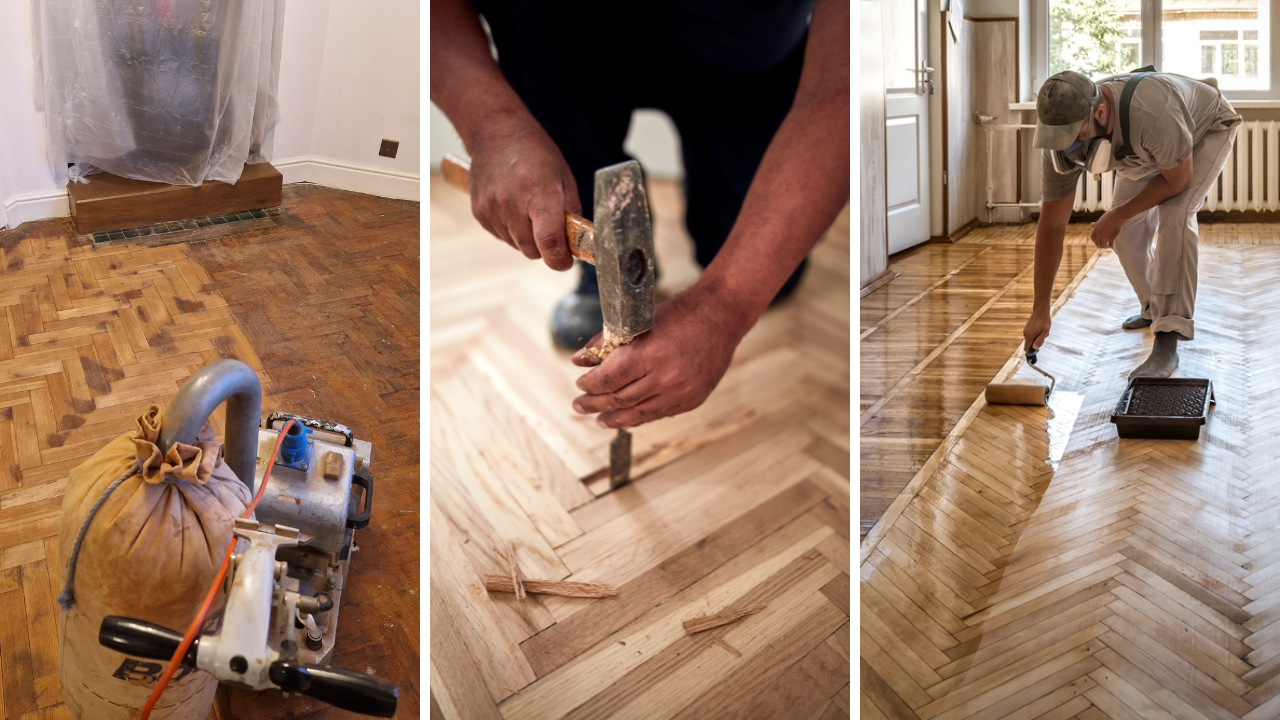
Loose blocks are lifted, old bitumen or brittle adhesive is scraped back, and blocks are re-bonded with modern elastomeric adhesives that flex with seasonal change. Missing pieces are replaced with matching species and grain orientation. Borders are re-stitched so mitres meet cleanly again.
3) Sanding (coarse to fine)
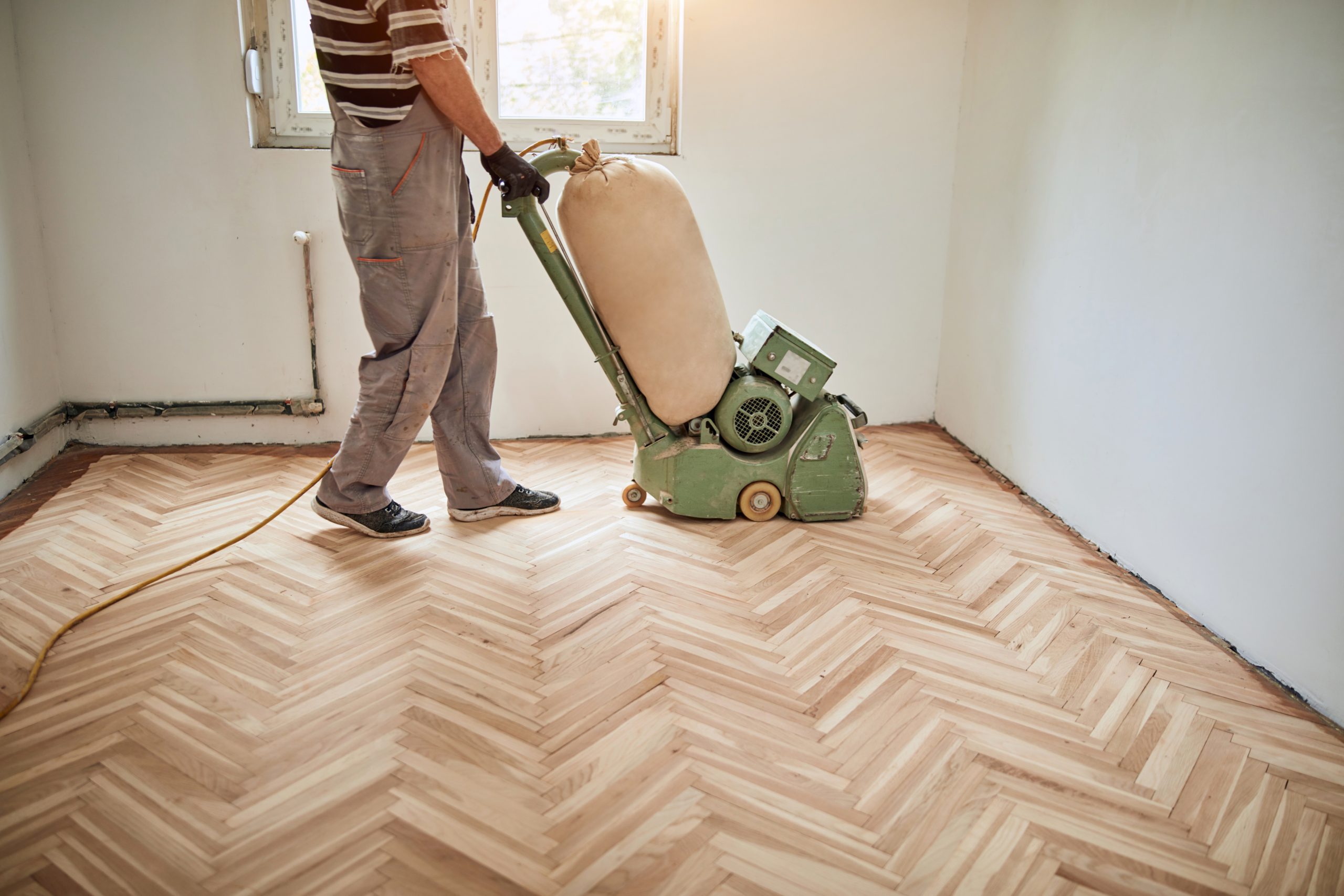
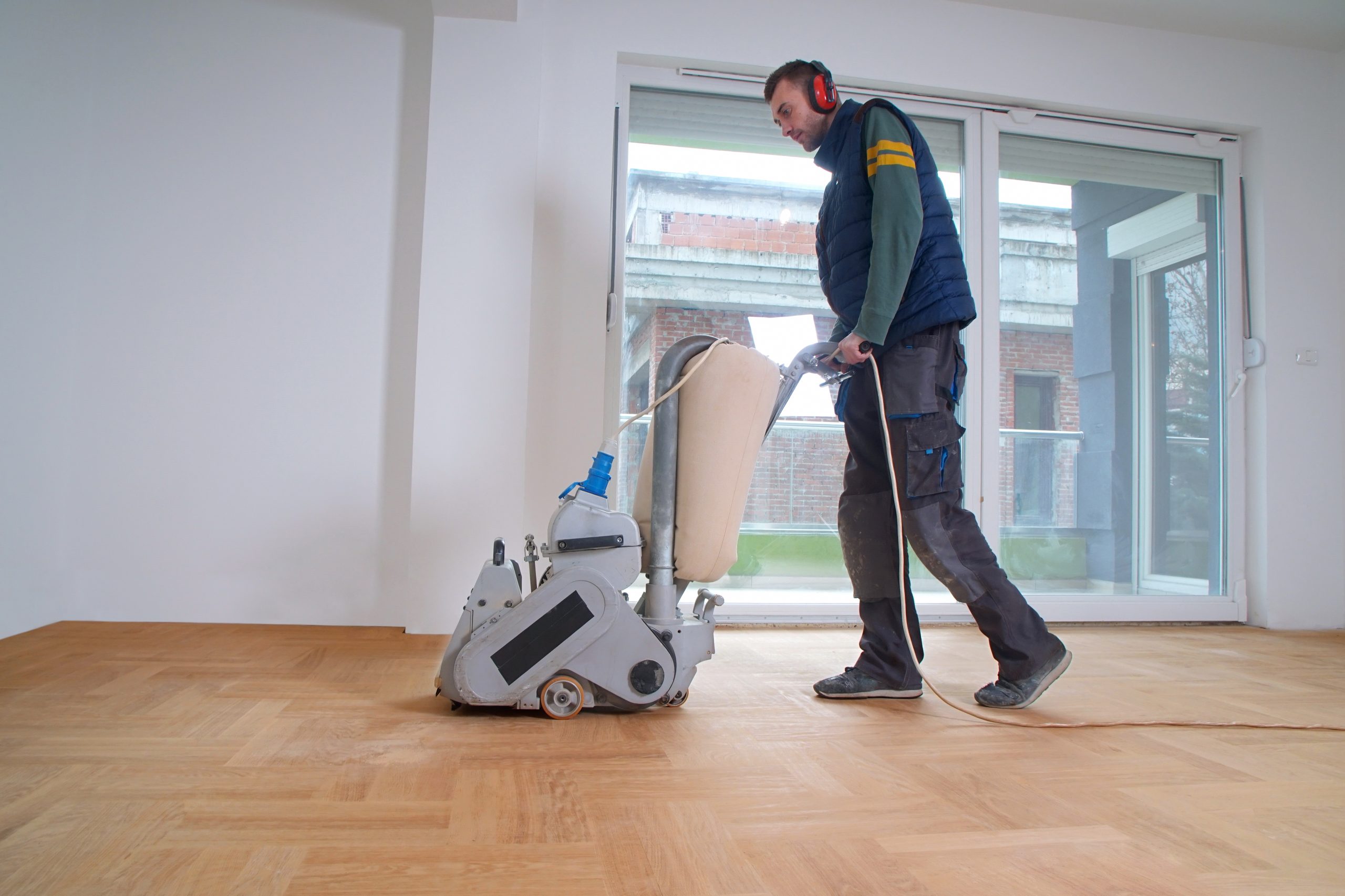
Sanding is not “one pass and done”. It’s a sequence—coarse to flatten and remove finish, medium to refine, fine to prepare for coating:
- Main field: drum or belt sander set diagonally to the pattern to avoid chatter, then with the grain where possible.
- Edges and corners: edge machine and detail sander where big machines can’t reach.
- Inter-grit vacuuming: removing dust between stages for a crisp scratch pattern and better finish adhesion.
The result at the end of this stage is clean, even timber with an elegant, matte “paper” feel—ready to seal.
4) Gap filling (cleaner, stronger, smarter)
Classic parquet was often laid tight; time introduces hairline gaps. Today’s best practice is a resin-and-sawdust slurry floated across the surface, binding with your own sanding dust for a perfect colour match. Wider voids (for example where blocks have shrunk at radiators) are filled with custom slip-feathers. When cured and resanded, the floor looks continuous and feels solid.
5) Colour tuning (optional)
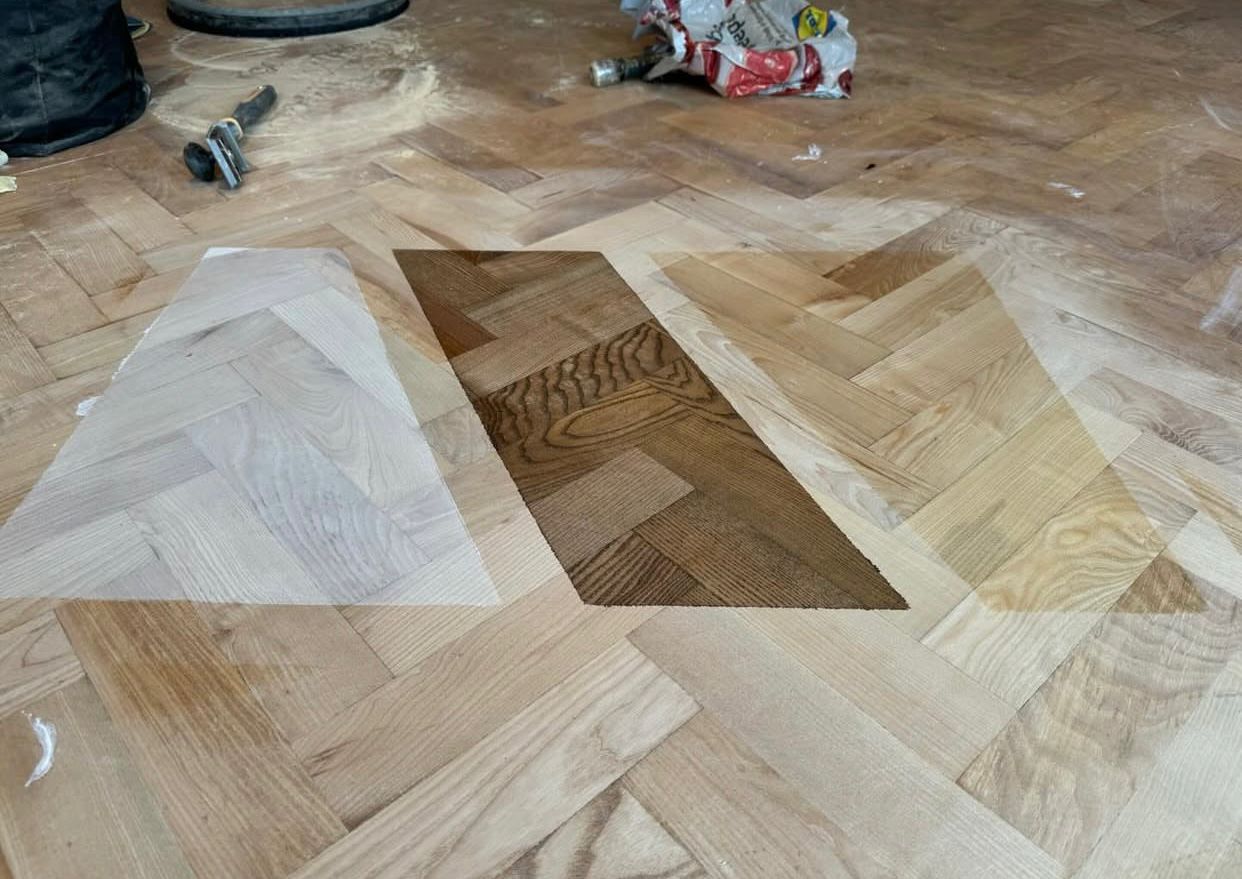
If you like the raw tone, skip this. If you want to shift mood—say, a cooler Nordic light or a deep, smoky clubroom—this is where stains, reactive treatments or tinted oils come in. The golden rule: test boards, not bravery. Lighting changes everything.
6) Finishing (your lifestyle decides)
Finishes protect and flatter. Your choice depends on use, maintenance appetite and look:
- Water-based lacquer: clear, quick-curing, low odour; available in extra-matt through gloss. Great for family spaces that see everything from scooters to supper parties.
- Hardwax oil: penetrating, warm and repairable in small areas; ideal for dining rooms and bedrooms where tactile warmth matters.
- Two-component commercial lacquers: ultimate durability for heavy traffic or pet-mad homes.
Between coats, a light denib ensures a buttery smooth final surface.
7) Curing and handover
Technically touch-dry does not mean “move the piano back”. Most finishes allow light foot traffic after a few hours, careful furniture placement after 24–48 hours, and full cure around a week (product specific). A written care guide and maintenance plan at handover separates an average job from an excellent one.
Dust, noise and greener choices
You shouldn’t have to live in a snow globe to get a beautiful floor. Modern sanding rigs connect to high-efficiency extractors that capture the vast majority of airborne dust. Sensible teams mask doorways, cap vents and tidy as they go. Expect a steady hum, not building-site bedlam.
On the materials side, low-VOC finishes and adhesives make homes healthier, and sustainably sourced replacement timber ensures today’s beauty isn’t tomorrow’s regret. These thoughtful details sit at the heart of Joyful Restoration, because craft and conscience belong together.
Design decisions that elevate parquet
Finishing is half science, half styling. A few designer-tested moves:
- Sheen level: Extra-matt hides scuffs and feels contemporary; satin gives a soft glow; gloss is glamorous but unforgiving.
- Edge tone: A slightly deeper border subtly frames the room, especially in large, bright spaces.
- Stair nosings and thresholds: Matching finishes keep the eye flow calm between rooms.
- Rugs and runners: Choose breathable underlays; avoid rubber-backed mats that trap moisture and discolour finishes.
- Light temperature: Warm bulbs enrich honeyed oaks; cooler bulbs complement pale, desaturated floors.
How long does it take?
Typical timelines (one room ≈ 15–20 m²):
- Survey & prep: 1–2 hours
- Repairs & relaying: half a day to two days depending on how many loose blocks you have
- Sanding & filling: 1 day
- Finishing: 1–2 days, including dry times between coats
Larger spaces, complex borders, heavy repairs or colour treatments add time. Good teams plan staging so you’re not living in limbo.
What does it cost (and what do you really get for it)?
Prices vary with location, floor size, repairs required and finish type, but the value question is bigger than a number. A properly restored parquet floor:
- Raises perceived property value—buyers notice timber done right.
- Reduces future spend—repairable finishes and robust subfloor work mean longer intervals between major refreshes.
- Improves daily life—easier cleaning, fewer allergens, safer underfoot, calmer acoustics.
Think of it as a once-in-a-decade investment that you’ll see and feel every day.
DIY vs hiring a specialist
Could you rent a sander and “have a go”? Perhaps. Should you? That depends on appetite for risk and detail. Parquet amplifies mistakes: sand across a herringbone the wrong way and you’ll leave chatters; stay too long on an edge and you’ll scallop blocks. Adhesives, moisture dynamics, stain behaviour—these are learnt in dust and sweat. If you want fewer variables and a lovelier result, leave Joyful Restoration to people who do it all week, every week.
A miniature case study: from tired to timeless
A 1930s sitting room with oak herringbone: patchy lacquer, a dark plant-pot halo, several loose blocks at the bay window, gaps wide enough to whistle in winter. The plan:
- Lift and re-bond loose blocks; replace a handful with grain-matched salvaged oak.
- Sand diagonally to flatten, then with the pattern to refine.
- Resin fill across the field; slip-feather the bay’s wider voids.
- Stain test: two cooler tones rejected; a neutral, light-enhancing tone chosen.
- Finish with three coats of water-based lacquer in extra-matt.
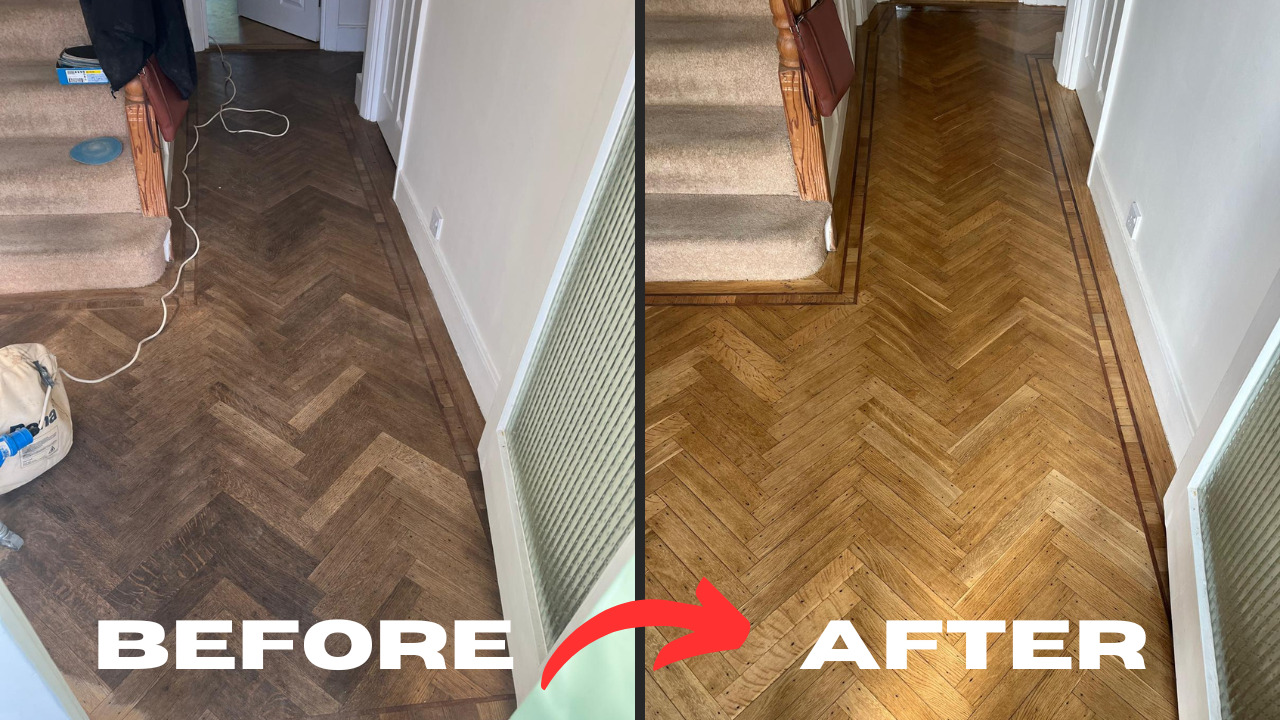
The room emerged brighter, calmer, acoustically softer. The border now reads as a crisp frame rather than a busy line. The owners said it felt like stepping into a “freshly tuned instrument”—which is exactly the point of Joyful Restoration.
Preparing your home (so the job flies)
A little planning makes a big difference:
- Clear the space: Furniture out if possible; if not, plan for a midway shuffle.
- Cables & curtains: Lift floor-level drapes; label and coil electrics.
- Pets & children: Arrange safe spaces away from machines and wet finishes.
- Access & parking: Shorter carrying distances mean faster turnaround.
- Decisions up front: Agree finish, sheen, colour and thresholds before day one.
Provide tea and a plug socket; you’ll have a loyal crew forever.

Aftercare that keeps the glow
Great restorations fail or flourish in the months after. Stick to these habits:
- First week: Treat the finish gently; avoid dragging furniture; felt pads on everything.
- Cleaning rhythm: Dry-mop or vacuum with a soft brush several times a week; damp-mop fortnightly with a pH-neutral cleaner. No steam.
- Entrance strategy: Coir or microfibre mats at doors catch grit before it scratches.
- Spill discipline: Wipe immediately; water is harmless if it doesn’t linger.
- Seasonal balance: Keep indoor humidity roughly 40–60% to minimise movement.
- Refresh cycles: A maintenance coat of oil or lacquer before wear cuts through to bare wood can extend the life of a full resand by years.

Common mistakes to avoid
- Chasing a showroom gloss in a busy family room: high sheen shows every mark.
- Skipping repairs to “save time”: loose blocks telegraph through finishes.
- Over-wet mopping: encourages cupping and edge raise.
- Using universal cleaners: many contain soaps or solvents that dull finishes.
- Ignoring sunlight: UV shifts colour—use blinds or rotate rugs for even patina.
Frequently asked questions
Will all stains and black rings disappear?
Most do. Deep iron-tannin reactions sometimes need targeted oxalic acid treatments; severe damage may require block replacement. A competent survey sets expectations honestly.
Is gap filling permanent?
Resin-and-dust fillers last well when the subfloor is dry and the room’s humidity stays stable. Very old buildings with lively movement may develop hairlines over time; they’re usually simple to touch in.
What about underfloor heating?
Parquet and UFH can be friends if the heating rises slowly, surface temperature stays under manufacturer limits (typically around 27 °C), and humidity is controlled. Adhesives and finishes must be rated for UFH.
Can you change the colour dramatically?
Yes—with the right prep, test panels and compatible systems. Going very dark can highlight dust and pets; very pale tones reveal every coffee grain. Choose with your life, not just your eyes.
Will it be noisy or messy?
Expect a steady working hum and a tidy site. Modern dust extraction captures the lion’s share of fine particles; smart masking does the rest. You’ll be fine to live in the house during most projects.
The quiet power of a considered floor
We talk a lot about kitchens and paint colours when we plan a room. But the floor is what you feel first and last each day. A well-restored parquet is the difference between “nice” and “note-worthy”. It makes socks slide better. It makes morning light taste fresher. It gives a home its heartbeat.
If your parquet is ready for more than a patch-up, choose Joyful Restoration and let the pattern sing again. Ask questions, insist on a clear plan, and expect craftsmanship you can see. When the work’s done, you’ll walk differently—shoulders down, steps lighter—because your floor will finally match the life happening on top of it.
For those who want beautiful, durable and easy-to-live-with results without the guesswork, start the conversation with Joyful Restoration today—and take the first step towards a room that feels newly minted every time you cross the threshold.